
World-Class Design Made in Czechia: Leading Czech Brands Presented to the UK Market at the Embassy in London
The Embassy of the Czech Republic in London hosted the event Czech Design in London. What is Czech design? What does the “Made in Czechia” label stand for? And what can the world learn from it? These questions were explored in a debate featuring Czech designers with strong ties to the UK. The networking event that followed connected Czech brands with British professionals and opened doors to new opportunities on the UK market.
The event, held on 11 September 2024, introduced Czech manufacturers united by long-term collaboration with designers, strong roots in traditional craftsmanship and industrial production, and a solid presence on international markets. Many of them are also members of the Association of Czech Industrial Design, which organised the event in cooperation with the Czech Embassy in London and CzechTrade UK.
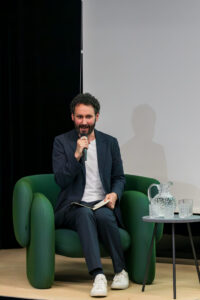
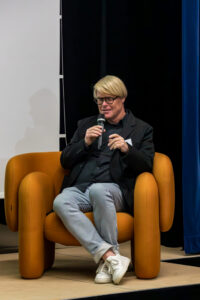
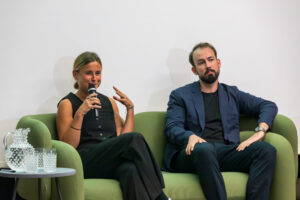
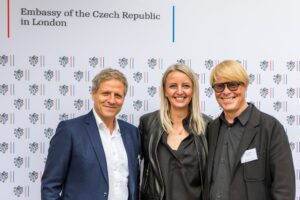
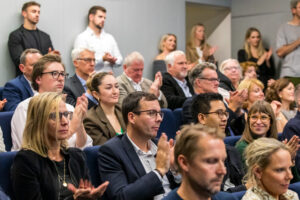
The opening discussion, moderated by Dezeen co-founder Benedict Hobson, featured designers David Karásek, Jakub Pollág and Dagmar Zvoníčková Fredholm. Addressing an audience of selected UK-based design professionals, they presented Czech design in a broad context.
“When I hear Czech design, I immediately think of precisely crafted glass and furniture – for example from TON,” says Benedict Hobson. However, many of the showcased brands prove that strong craftsmanship can also underpin successful projects beyond these traditional categories. This is evident in companies focused on industrial metalwork, such as mmcité, a manufacturer of urban furniture with international subsidiaries; M&T, whose door handles are used worldwide; or Todus, an outdoor furniture brand that established its reputation abroad even before gaining recognition at home.
Czech design is also known for its unconventional edge. “We can inspire others with our sense of humour, creative thinking and a slightly provocative approach that characterises much of Czech design,” adds Dagmar Zvoníčková Fredholm, founder of Novavita, a brand specialising in tiles made from recycled materials. This unconventional approach was also reflected in Rückl’s bold Heroine vase collection by Kateřina Handlová, as well as TON’s chair 314, which reinterprets the iconic bentwood chair for the 21st century through innovative materials.
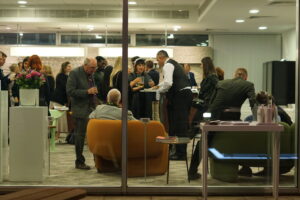
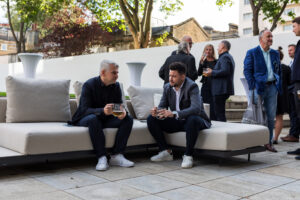
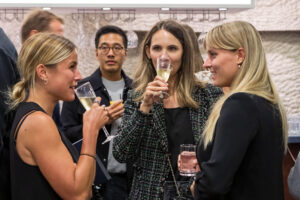
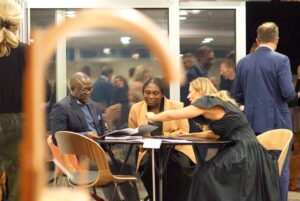
The subsequent networking event, curated by David Karásek, brought together 125 guests, including British interior designers, architects, design retailers and developers. It provided an opportunity to build new business connections, meet in person and present the best of current Czech production. “Events like Czech Design in London directly connect the right people and strengthen the international presence of Czech brands. Promoting design as a driver of innovation and a key tool of competitiveness is one of the main goals of the Association of Czech Industrial Design,” says AČPD Chairman Martin Wichterle.
The event is complemented by an outdoor panel exhibition on the embassy fence, presenting all participating member and partner brands of the Association. It remains on display on the busy Notting Hill Gate until the end of September.
Key takeaways from the discussion
“We can be world-class,” says Dagmar Zvoníčková Fredholm. “The longer I live abroad, the more I appreciate the value of our Czech roots and production. Often, what we lack is confidence. We can be just as good as anyone else – we just need to be open to the world.”
The “Made in Czech Republic” label remains an important value. “We may not mention it in the first sentence, but certainly in the second,” says David Karásek, designer and owner of mmcité. “Building its reputation requires consistent work on our collections, maintaining high product standards and continuously opening up to new opportunities.”
“Building identity is essential – both for individual brands and for Czech design as a whole,” adds Jakub Pollág, designer and RCA graduate. “Brands can either build on tradition or create something entirely new. The best Czech design brands are able to do both.”
“We design and manufacture our products locally – and that is our strength,” concludes Martin Wichterle. “Czech design is often created entirely at home, from concept to production. We have the factories, the technologies and the know-how. It is not just about design, but about Czech industry as a whole.”